What Is 316L Stainless Steel? The Surgical-Grade Secret
What Is 316L Stainless Steel? The Surgical-Grade Secret Behind Our Jewelry
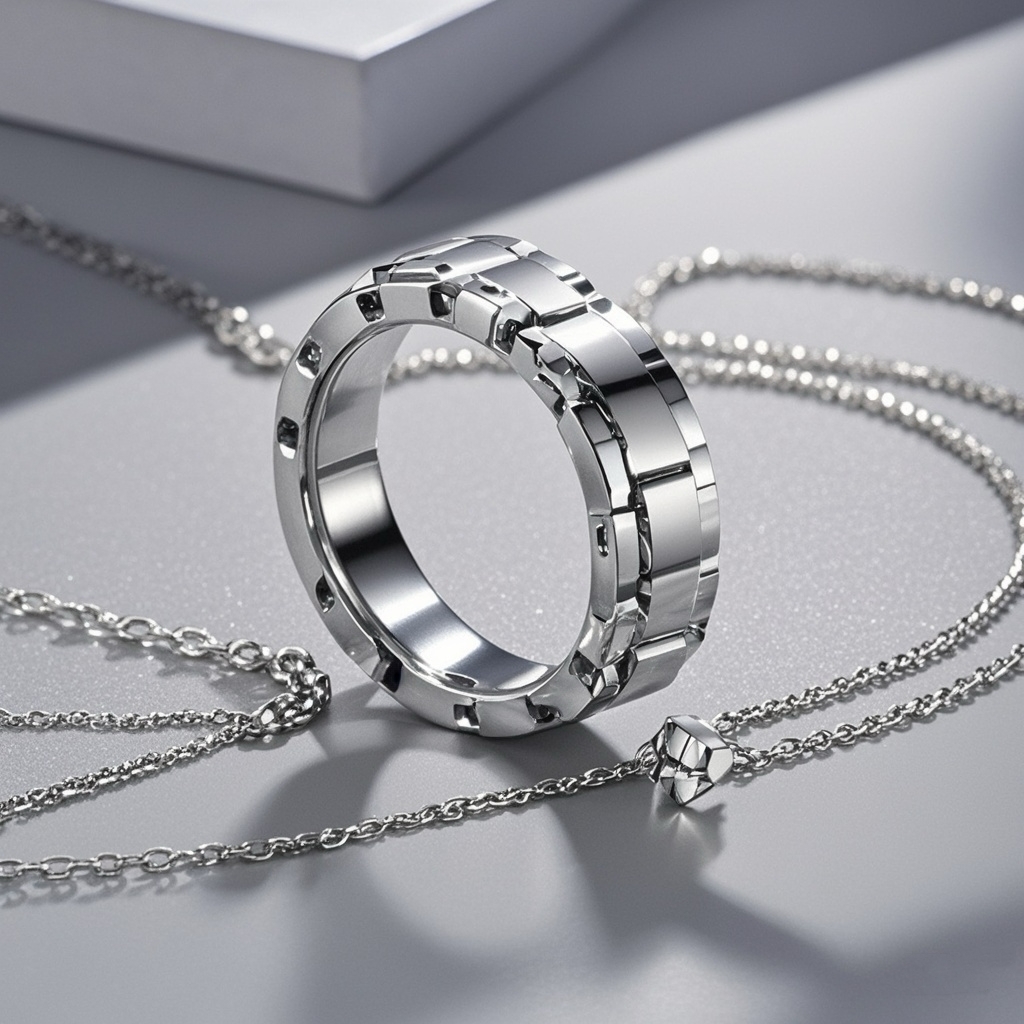
When most people hear "stainless steel," they think of kitchen sinks. Or maybe a watch band. But the stainless steel in your kitchen is not the same as the stainless steel in our jewelry — and the difference matters more than you might think.
The material we use at LOTTEDS — 316L stainless steel — has a pedigree that most people don't know about. It's been inside human bodies. It's been to space. And it's quietly become the gold standard for anyone who wants jewelry that performs as beautifully as it looks.
What Does "316L" Actually Mean?
Stainless steel isn't one thing. It's a family of alloys, each with a different recipe optimized for different uses. The numbers tell you what's in it:
- 316 refers to the specific grade — an austenitic stainless steel containing molybdenum, which dramatically improves corrosion resistance.
- L stands for "low carbon" — which makes the alloy easier to work with at high precision and reduces the risk of corrosion at weld points.
In plain terms: 316L is the premium version of stainless steel. It's more resistant to corrosion than the 304 grade used in household appliances. It's biocompatible — meaning it can be safely implanted in the human body. And it's the grade specified for surgical instruments, orthopedic implants, and marine equipment exposed to saltwater.
Where You've Already Encountered 316L (Without Knowing It)
Surgical Implants
Hip replacements, bone plates, and surgical screws are made from 316L because the body doesn't reject it.
Luxury Watches
Rolex and other high-end brands use 316L (and sometimes 904L) for watch cases — chosen for its mirror polish and corrosion resistance.
Aerospace
Aircraft components exposed to extreme temperatures and pressures rely on 316L's structural integrity.
Marine Equipment
Boat fittings and underwater hardware use 316L because it withstands constant saltwater exposure.
Why 316L for Jewelry?
When Livia founded LOTTEDS, she had one non-negotiable requirement: the jewelry must never irritate skin. After 12 years in customer service, she'd heard every horror story — rashes from nickel, green marks from brass, inflammation from reactive metals.
She tested gold (too soft, scratches easily, expensive). She tested sterling silver (beautiful but requires maintenance to prevent tarnish). She tested titanium (incredibly biocompatible but difficult to work with for intricate designs).
316L stainless steel was the answer:
Nickel-free. While 316L does contain trace nickel in its alloy structure, the nickel is so tightly bound that it doesn't leach out — even against sweaty skin. It passes the EU's strict nickel release standards for items in prolonged skin contact.
Hypoallergenic. Biocompatible means the human body doesn't recognize it as a foreign irritant. This is why surgeons put it inside people. Your earlobe is far less demanding than a hip joint.
No green marks. Ever. Green marks come from copper oxidation. 316L contains zero copper. No copper = no green.
316L vs. Gold: An Honest Comparison
We love the look of gold. That's why we use PVD-bonded 18K gold on many of our pieces. But as a base metal, gold has limitations:
- 24K gold is too soft for daily-wear jewelry — it bends and scratches easily.
- 18K and 14K gold are harder but still scratch more readily than steel.
- White gold requires rhodium plating that wears off and needs re-plating every 1–2 years.
- Gold is expensive — and much of that cost is driven by market speculation, not intrinsic value.
316L steel, by contrast: harder than gold, more scratch-resistant, requires zero replating, and costs a fraction of the price. When paired with our PVD 18K gold finish, you get the warm, luxurious look of gold with the resilience of surgical steel. Learn how PVD works →
Is 316L Heavy?
Surprisingly, no. Despite its strength, 316L is lighter than gold of equivalent volume. Our boldest statement pieces — the Mrs. Diva bangles, the Roller bands — feel substantial enough to signal quality, but light enough to wear all day without fatigue.
The Bottom Line
316L stainless steel isn't a compromise. It's an upgrade — chosen not because it's cheaper than gold, but because it's better for the job: stronger, safer for skin, and more practical for the way people actually live. The fact that it costs less is a bonus, not a trade-off.
Experience 316L for Yourself
Shop 316L JewelryFull materials guide → · Read: Why Jewelry Turns Skin Green →
Leave a comment