Moissanite — The Gemstone That Outshines Diamond
Moissanite: The Gemstone That Outshines Diamond
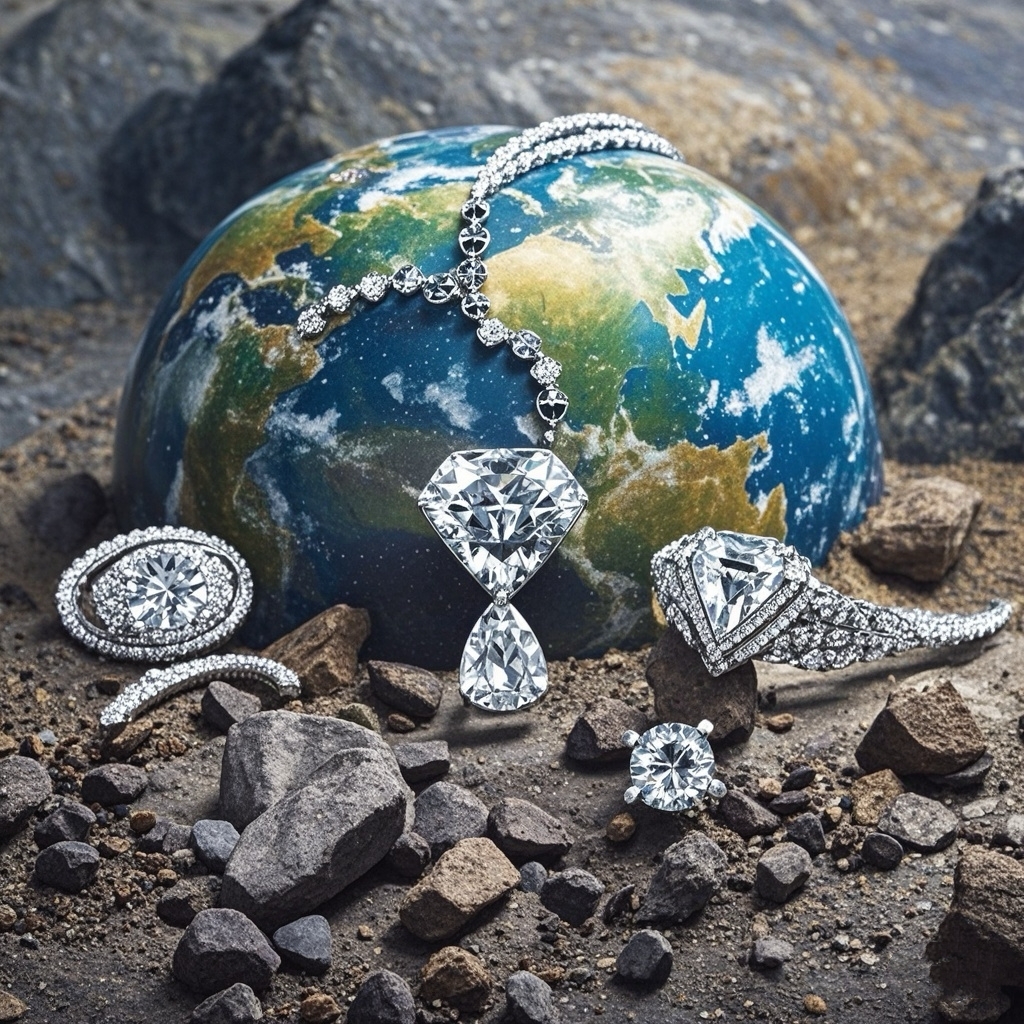
If you haven't heard of moissanite yet, you will. It's the gemstone that's quietly transforming the jewelry industry — offering more fire than diamond, more brilliance per dollar, and an origin story that literally starts in the stars.
A Discovery From Outer Space
In 1893, French scientist Henri Moissan was examining rock samples from a meteor crater in Arizona when he found tiny crystals that he initially mistook for diamond. After testing, he realized they were something else entirely: silicon carbide — a material never before found in nature.
The mineral was later named moissanite in his honor. And for over a century, it remained one of the rarest minerals on Earth — natural moissanite is virtually nonexistent outside of meteorites.
Then, in the late 20th century, scientists figured out how to grow it in laboratories. And the jewelry world changed forever.
Moissanite vs. Diamond: The Honest Comparison
| Property | Moissanite | Diamond |
|---|---|---|
| Hardness (Mohs Scale) | 9.25 | 10 |
| Brilliance (Refractive Index) | 2.65–2.69 | 2.42 |
| Fire (Dispersion) | 0.104 | 0.044 |
| Color | Near-colorless (D–F equivalent) | D–Z color scale |
| Price (per carat equivalent) | $50–$300 | $2,000–$20,000+ |
| Origin | Lab-grown, 100% traceable | Mined or lab-grown |
Let's break down what this actually means:
- Hardness: Diamond is a 10 — the hardest material on Earth. Moissanite is a 9.25. For context, sapphire and ruby are 9. Moissanite is harder than any gemstone except diamond, and more than hard enough for daily-wear jewelry that will last generations.
- Brilliance: Moissanite actually has a higher refractive index than diamond. This means it bends light more dramatically — creating more sparkle and rainbow fire. Some people prefer diamond's more subtle white sparkle; others love moissanite's colorful fire.
- Fire: This is where moissanite really stands out. Its dispersion (0.104) is more than double diamond's (0.044). In sunlight or under spot lighting, moissanite throws rainbow flashes that are unmistakable and mesmerizing.
In plain English: Diamond sparkles white. Moissanite sparkles rainbow. Both are stunning. It's a matter of personal preference — not a question of which is "real."
Is Moissanite "Fake"?
No. Moissanite is a distinct gemstone with its own chemical composition (silicon carbide, SiC), its own optical properties, and its own value. It's not an imitation diamond — any more than a sapphire is an imitation diamond, or a ruby is. It's a different gemstone that happens to be colorless and exceptionally brilliant.
Lab-grown moissanite is the standard today — natural moissanite is too rare for commercial jewelry. And because it's grown in controlled conditions, it's fully traceable, conflict-free, and environmentally clean.
Why We Offer Both Moissanite and Lab-Grown Diamond
At LOTTEDS, we believe in choice — and we believe that different people want different things from their jewelry:
- If you want the classic, crisp white sparkle of a diamond — with the same chemical composition as a mined stone but without the environmental cost — choose lab-grown diamond.
- If you want maximum fire and brilliance at an even more accessible price — and you love the idea of wearing a gemstone that was first discovered in a meteorite — choose moissanite.
Both are real. Both are ethically clean. Both will last forever. It's just a question of which sparkle speaks to you.
Explore Moissanite & Lab-Grown Diamond Jewelry
Shop NowFull materials guide → · Read: Lab-Grown vs. Mined Diamonds →
Hinterlassen Sie einen Kommentar